
Heart-Healthy Breakfast Ideas: The Best Breakfast for Heart Health
What you eat in the first meal of the day can help protect your heart. A heart-healthy breakfast pairs fiber with lean protein and healthy fats, and keeps added sugar, sodium, and saturated fat low. Below, the team at UAB Medical West explains what makes a breakfast good for your heart and shares 15 easy heart-healthy breakfast ideas.
Why Breakfast Matters for Heart Health
Heart disease is the leading cause of death in the United States, and diet is one of the biggest factors you control. Research published in the Journal of the American College of Cardiology linked regularly skipping breakfast with a higher risk of death from cardiovascular disease.
Skipping breakfast is also associated with risk factors that strain the heart, including:
- High blood pressure
- High LDL (“bad”) cholesterol
- Type 2 diabetes and insulin resistance
- Weight gain and metabolic syndrome
The type of breakfast matters as much as eating one. A pastry and a sweetened coffee drink can deliver more sugar and saturated fat than a full day’s recommended limit.
What Is the Best Breakfast for Heart Health?
The best breakfast for heart health combines three things: soluble fiber, lean or plant protein, and unsaturated fat. Oatmeal topped with berries and walnuts is a strong example. It delivers cholesterol-lowering fiber, antioxidants, and omega-3 fats in one bowl.
Use this checklist when building any heart-healthy breakfast:
- Fiber: whole grains, fruit, vegetables, beans, chia, or flax. The American Heart Association recommends 25 to 30 grams of fiber a day from food.
- Protein: eggs, Greek yogurt, cottage cheese, tofu, beans, or lean turkey.
- Healthy fats: nuts, seeds, avocado, olive oil, or salmon.
- Low sodium: the AHA recommends no more than 2,300 mg a day, ideally closer to 1,500 mg for most adults.
- Little added sugar: the AHA advises no more than 25 grams a day for women and 36 grams for men.
Best Foods for a Heart-Healthy Breakfast
Oats and whole grains
Oats contain beta-glucan, a soluble fiber that helps lower LDL cholesterol. Choose steel-cut or old-fashioned oats over flavored instant packets, which often carry added sugar. Whole-grain bread, quinoa, and bran cereal are good options too.
Berries and other fruit
Blueberries, strawberries, and raspberries are rich in fiber and antioxidants called anthocyanins, which are linked to healthier blood vessels. Fresh or frozen without added sugar both work.
Eggs
For most healthy adults, the AHA says up to one whole egg a day can fit a heart-healthy diet. Cook them in olive oil instead of butter, and skip the bacon and sausage on the side.
Nuts and seeds
Walnuts, almonds, chia seeds, and ground flaxseed add fiber, protein, and unsaturated fat. Walnuts, chia, and flax also supply plant-based omega-3s. A small handful (about 1 ounce) is a serving.
Greek yogurt and cottage cheese
Plain, low-fat Greek yogurt offers protein and probiotics. Flavored yogurts can contain several teaspoons of added sugar, so sweeten plain yogurt with fruit instead.
Avocado
Avocado is high in monounsaturated fat and fiber, which support healthy cholesterol levels. Pair it with whole-grain toast for a filling meal.
Vegetables
Spinach, tomatoes, peppers, mushrooms, and onions add fiber and potassium. Potassium helps balance sodium and supports healthy blood pressure.
15 Heart-Healthy Breakfast Ideas
Quick and grab-and-go
- Overnight oats: old-fashioned oats, low-fat milk, chia seeds, and berries, prepped the night before.
- Greek yogurt parfait: plain Greek yogurt layered with berries, walnuts, and a sprinkle of ground flax.
- Peanut butter banana toast: whole-grain toast with natural peanut butter (no added sugar or salt) and sliced banana.
- Hard-boiled eggs and fruit: two eggs you boiled ahead of time with an apple or orange.
- Heart-healthy smoothie: spinach, frozen berries, plain yogurt, and a tablespoon of chia seeds.
Sit-down breakfasts
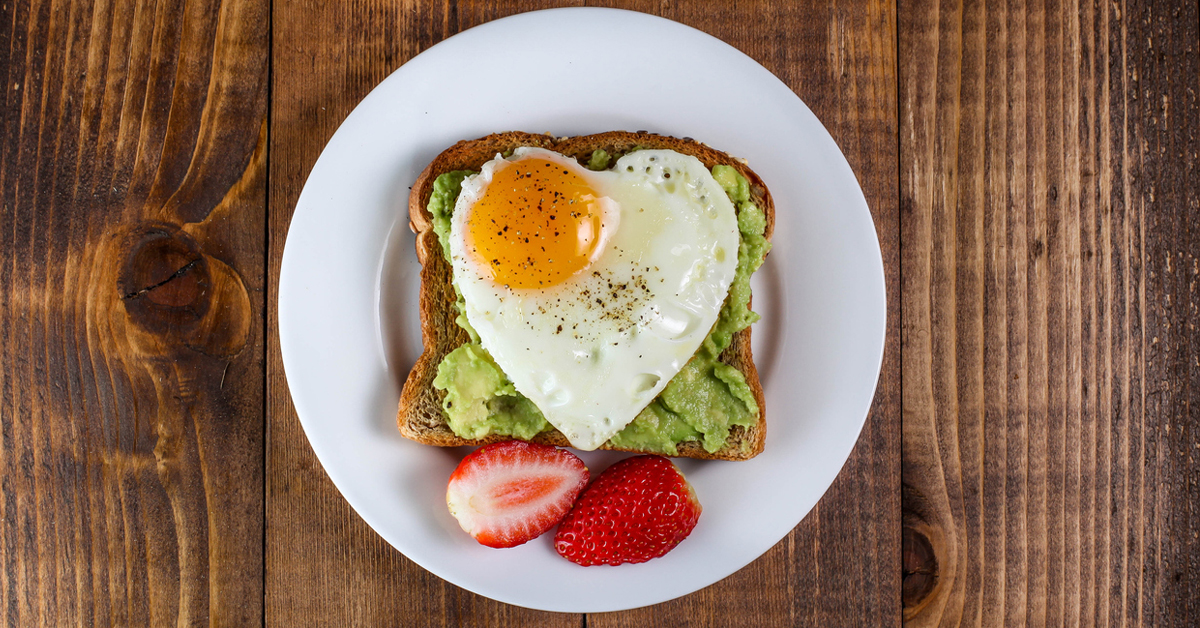
- Avocado toast with egg: whole-grain toast, mashed avocado, a poached egg, and tomato slices.
- Veggie omelet: one whole egg plus egg whites with spinach, peppers, and mushrooms, cooked in olive oil.
- Steel-cut oatmeal: topped with blueberries, walnuts, and a dash of cinnamon instead of brown sugar.
- Smoked salmon on whole-grain toast: with a thin layer of light cream cheese and cucumber. Salmon is salty, so keep the portion small.
- Breakfast quinoa bowl: warm quinoa with milk, sliced almonds, and diced apple.
- Tofu scramble: crumbled tofu with turmeric, spinach, and black beans.
Make-ahead options
- Egg muffin cups: eggs baked with vegetables in a muffin tin; refrigerate for up to four days.
- Chia pudding: chia seeds soaked overnight in unsweetened almond or low-fat milk, topped with fruit.
- Whole-grain muffins: made with oat flour, mashed banana, and walnuts, with less sugar than store-bought.
- Breakfast burrito: whole-wheat tortilla with scrambled eggs, black beans, salsa, and avocado. Freeze individually.
Heart-Healthy Cereal: What to Look For
Many cereals are marketed as healthy but are high in sugar. When choosing a heart-healthy cereal, check the label for:
- A whole grain listed as the first ingredient
- At least 3 grams of fiber per serving (5 or more is better)
- 6 grams of added sugar or less per serving
- Low sodium, ideally under 200 mg per serving
Plain shredded wheat, bran flakes, and unsweetened muesli are good starting points. Add your own fruit for sweetness.
Breakfast Foods to Limit for a Healthy Heart
These foods are common at breakfast but can raise cholesterol, blood pressure, or blood sugar:
- Processed meats: bacon, sausage, and ham are high in sodium and saturated fat.
- Pastries and sweets: donuts, muffins, and cinnamon rolls are high in refined carbs, sugar, and often saturated fat.
- Sugary cereals and flavored instant oatmeal: check labels for added sugar.
- Breakfast sandwiches from drive-thrus: many contain more than half a day’s sodium.
- Sweetened coffee drinks and juice: these add sugar without fiber.
- Butter and fried foods: cook with olive or canola oil instead.
Frequently Asked Questions
What is a good heart-healthy breakfast?
A good heart-healthy breakfast includes fiber, protein, and healthy fat with little added sugar or sodium. Examples include oatmeal with berries and nuts, a veggie omelet with whole-grain toast, or Greek yogurt with fruit.
Are eggs good for your heart?
For most healthy adults, eating up to one whole egg a day can be part of a heart-healthy diet. If you have high cholesterol, diabetes, or heart disease, ask your doctor how many eggs are right for you.
Is oatmeal good for your heart?
Yes. Oats contain beta-glucan, a soluble fiber shown to help lower LDL cholesterol. Choose plain oats and add fruit and nuts rather than sugar.
Is it bad for your heart to skip breakfast?
Studies have linked regularly skipping breakfast with higher rates of heart disease risk factors. If you aren’t hungry in the morning, a small option like yogurt or a piece of fruit with nuts is a good start.
Protect Your Heart with UAB Medical West
A healthy breakfast is one part of protecting your heart. Regular checkups help catch high blood pressure, high cholesterol, and diabetes early, when they’re easiest to manage.
UAB Medical West provides primary care, UAB Cardiology, and Cardiac Rehabilitation for patients in Bessemer, Hueytown, Hoover, McCalla, and across West Jefferson County. Find a doctor or call (205) 481-7000 to schedule an appointment.