

You used to walk to the mailbox without a second thought. Now you are catching your breath halfway there.
It is tempting to blame this on being out of shape, getting older, or a few extra pounds. Sometimes that explanation is the right one. But shortness of breath can also be one of the clearest signals that something else is going on, and the cause is not always in your lungs.
At UAB Medical West, our pulmonology team partners with UAB Medicine to help patients in Bessemer and West Jefferson County understand what is behind their breathlessness and find the right treatment.
Shortness of Breath At a Glance
- Sudden, severe shortness of breath, especially with chest pain, fainting, or blue lips, is a medical emergency. Call 911 immediately.
- Shortness of breath can come from asthma, COPD, heart conditions, anemia, anxiety, or simply being out of shape.
- New breathlessness during light activity, such as walking short distances, is worth mentioning to your doctor.
- Primary care is often the right first stop, though pulmonology may be recommended for ongoing or unclear symptoms.
Why Do I Get Winded So Easily?
Feeling out of breath after real exertion is normal. The concern is when it shows up during activities that used to feel easy.
Common reasons people get winded more easily than they used to include:
- Being out of shape or carrying extra weight
- Asthma
- COPD, or chronic obstructive pulmonary disease
- Allergies or ongoing airway irritation
- Anemia, a condition where the blood carries less oxygen than it should
- Anxiety
- Heart conditions that make it harder for the body to move oxygen where it is needed
- Lung infections, such as pneumonia or bronchitis
Some are temporary and treatable at home. Others need medical evaluation before they become bigger problems.
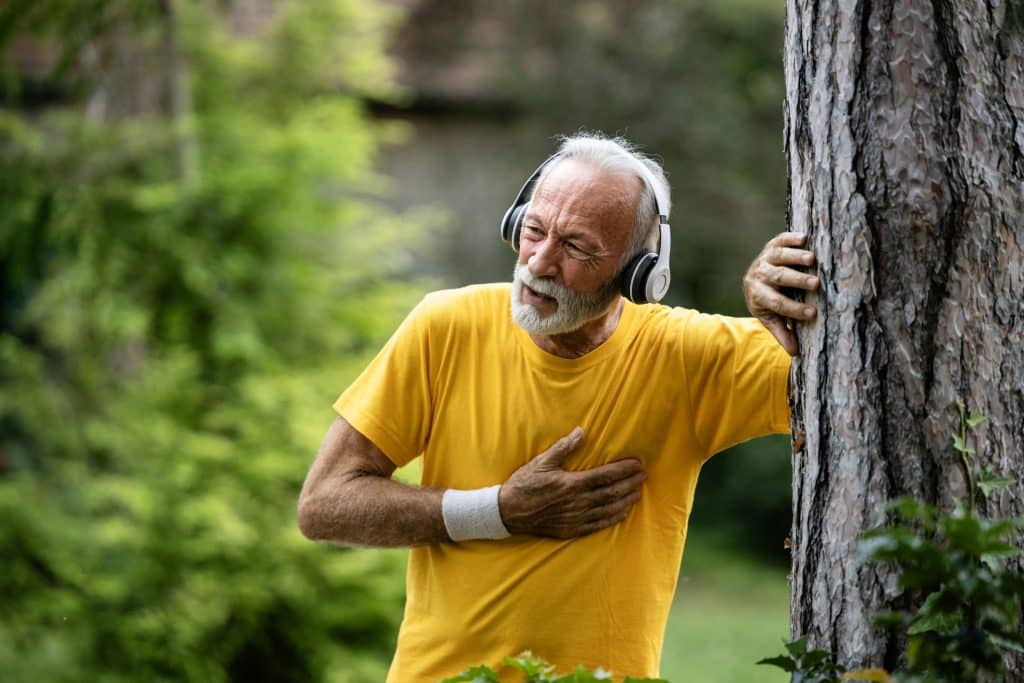
Is Shortness of Breath When Walking Short Distances Normal?
Not usually, especially if it is new.
Everyone has an off day, but shortness of breath when walking short distances, like across a parking lot, deserves attention if it keeps happening or worsens.
A useful test is whether you can still carry on a conversation while walking. Pausing mid-sentence to catch your breath, or quietly avoiding tasks you used to handle easily, is worth mentioning to a doctor.
What Does Shortness of Breath With No Chest Pain Mean?
Many people assume that no chest pain means the heart and lungs are fine, but that is not always true. Shortness of breath with no chest pain can still point to a real underlying condition, including asthma, COPD, anemia, being out of shape, or certain heart conditions.
That said, sudden and severe shortness of breath is still a medical emergency. A blood clot in the lungs or a sudden worsening of heart failure can cause breathlessness with little or no chest discomfort. If breathing difficulty comes on quickly and feels serious, do not wait it out. UAB Medical West’s Emergency Department in Bessemer and our Freestanding Emergency Department in Hoover are both open 24/7 for care like this.
Breathing Problems That Need a Doctor
Not every case of breathlessness needs an ER visit, but it deserves a conversation with a provider.
Breathing problems that need a doctor’s attention include:
- Shortness of breath that does not improve with rest
- Breathlessness that has been getting worse over weeks or months
- Waking up at night gasping for air
- A persistent cough or wheezing alongside shortness of breath
- Swelling in the legs, ankles, or feet
- Breathlessness that limits activities you used to do without difficulty
If any of these sound familiar, it is worth scheduling an appointment rather than waiting to see if it improves.
When Should You See a Pulmonologist for Shortness of Breath?

Knowing when to see a pulmonologist for shortness of breath starts with primary care. A provider can review your medical history, check your oxygen levels, listen to your lungs and heart, and order initial testing such as bloodwork or a chest X-ray.
A referral to pulmonology is often recommended when:
- Symptoms continue after an initial evaluation
- You have a chronic lung condition, such as asthma or COPD, that needs ongoing management
- Testing points to a lung-specific cause that needs a closer look
- Shortness of breath is affecting your daily life, and the cause is still unclear
Our Pulmonology team partners with UAB Medicine to provide advanced diagnostics and treatment without leaving Bessemer.
What Tests Are Used to Diagnose Shortness of Breath?
Identifying the cause usually starts with a conversation, followed by testing tailored to what your provider suspects.
Common tests for shortness of breath include:
- Imaging, such as a chest X-ray or CT scan, to look at the lungs and airways
- Pulmonary function tests, which measure how much air you can breathe in and out and how well your lungs are working
- Oxygen-level evaluation, using a small sensor placed on your finger to check how well oxygen is moving through your blood
- Blood tests to check for anemia or signs of infection
- Heart tests, such as an EKG, if a cardiac cause is suspected
These tests help your provider understand not just that you are short of breath, but why, so treatment can target the root cause.
You Do Not Have to Live With Unexplained Breathlessness
It is easy to write off shortness of breath as a sign of aging or a few extra pounds, and sometimes that is exactly what it is.
But when breathlessness changes your daily life or simply does not add up, it deserves a closer look. Catching the cause early often means simpler treatment.
You know your body better than anyone. If your breathing feels different from how it used to, trust that instinct.
Get Answers for Unexplained Shortness of Breath at UAB Medical West
Getting the right diagnosis is the first step toward feeling better. UAB Medical West’s Pulmonology team, in partnership with UAB Medicine, evaluates and treats asthma, COPD, and other breathing conditions for patients in Bessemer across West Jefferson County.
Schedule an appointment today to find out what is behind your shortness of breath.
If you are experiencing sudden or severe shortness of breath, call 911 immediately.