
When you or a loved one suddenly feels sick or injured, one of the first questions that comes to mind is often, “Where should I go for care?”
It’s not always an easy decision. Some symptoms feel urgent but may not require emergency treatment. Others seem minor at first, but actually need immediate medical attention.
Understanding the difference between emergency care, urgent care, and primary care can help you make faster, safer decisions when it matters most.
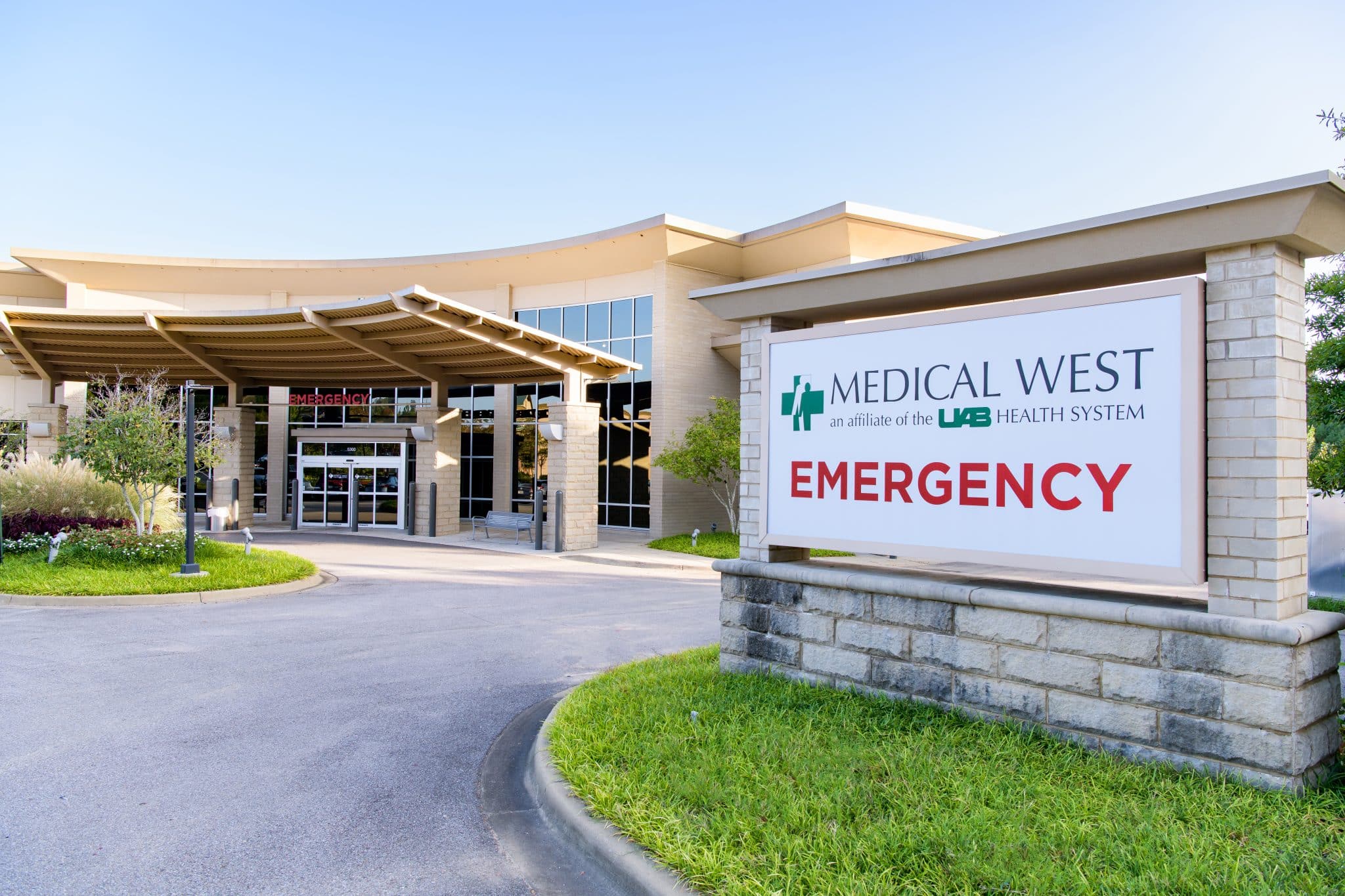
At UAB Medical West, emergency medicine teams care for patients across Bessemer, Hoover, and West Jefferson County every day, treating everything from severe injuries to life-threatening cardiac events. Knowing when to seek emergency care can protect your health and, in some cases, save your life.
At a Glance
- Emergency rooms treat life-threatening symptoms and serious injuries that need immediate care.
- Urgent care is appropriate for minor illnesses and injuries that are not emergencies.
- Symptoms like chest pain, trouble breathing, severe bleeding, or stroke symptoms should never be ignored. If you believe you are experiencing a medical emergency, call 911 immediately.
- UAB Medical West’s Emergency Department is a fully equipped Level 3 Trauma Center serving patients of all ages.
What’s the Difference Between the ER and Urgent Care?
A lot of people use the terms interchangeably, but there are important differences between ER and urgent care facilities.
Emergency Room
Emergency departments are designed to treat serious or life-threatening conditions that require immediate medical attention. They operate 24/7 and have access to:
- Emergency physicians
- Trauma care
- Advanced imaging and lab testing
- Cardiac monitoring
- Surgical teams and hospital admission, if needed
Urgent Care
Urgent care centers are best for non-life-threatening conditions that still need prompt attention, such as:
- Minor cuts or burns
- Ear infections
- Mild flu symptoms
- Sprains
- Sore throats or minor illnesses
Urgent care fills the gap between primary care and emergency medicine, but it is not equipped to handle severe or unstable medical emergencies.
When Should You Go to the ER?
One of the most important questions patients ask is, when should you go to the ER instead of waiting or visiting urgent care.
Emergency care is appropriate when symptoms could threaten life, limb, or long-term health if treatment is delayed.
Examples include:
- Chest pain
- Difficulty breathing
- Stroke symptoms
- Severe allergic reactions
- Major injuries or trauma
- Seizures
- Sudden confusion or loss of consciousness
- Severe bleeding that won’t stop
If symptoms feel severe, sudden, or alarming, it is better to seek emergency evaluation than risk waiting too long.
When Is Chest Pain an Emergency?
Chest pain is one symptom people often hesitate to act on. Some assume it is indigestion, stress, or muscle strain. But knowing when chest pain is an emergency can make a critical difference.
Seek emergency care immediately if chest pain:
- Feels heavy, tight, squeezing, or crushing
- Spreads to the arm, jaw, neck, or back
- Occurs with sweating, nausea, dizziness, or shortness of breath
- Comes on suddenly or worsens rapidly
- Happens during physical activity
The UAB Medical West emergency teams use cardiac monitoring, imaging, blood testing, and rapid evaluation protocols to identify heart-related emergencies quickly and begin treatment immediately if needed.
Symptoms That Require Emergency Care
Some symptoms should never be ignored because they may signal a serious medical condition.
Common symptoms that require emergency care include:
- Trouble breathing or shortness of breath
- Sudden weakness or numbness, especially on one side of the body
- Severe abdominal pain
- High fever with confusion
- Loss of consciousness
- Serious head injuries
- Severe burns
- Uncontrolled bleeding
In many situations, waiting to see if symptoms improve can increase the risk of complications.
Should I Go to the ER or Urgent Care?
A helpful way to think about it is this:
Urgent Care Is Appropriate For:
- Mild fevers
- Minor cuts needing stitches
- Sprains or strains
- Mild dehydration
- Ear infections
- Mild flu or cold symptoms
The ER Is Appropriate For:
- Severe pain
- Chest pain or breathing problems
- Major trauma or fractures
- Stroke symptoms
- Significant bleeding
- Sudden neurological symptoms
When in doubt, especially if symptoms are severe or rapidly worsening, emergency care is usually the safest choice.
What Happens in a Full-Service Emergency Department?
Many people do not realize how much a full-service emergency department can do.
At UAB Medical West, the Emergency Department includes:
- 24/7 emergency physicians and nurses
- Cardiac monitoring and advanced imaging
- Trauma evaluation capabilities
- Laboratory testing
- Emergency stabilization and treatment
- Access to hospital admission and specialty care when needed
The department is designed to rapidly assess patients, determine the severity of illness or injury, and begin treatment as quickly as possible.
This level of care is especially important during strokes, heart attacks, severe infections, or traumatic injuries, where every minute matters.
When Primary Care May Be the Better Option
Not every medical issue requires the same-day urgent or emergency care.
Primary care providers are often the best choice for:
- Chronic condition management
- Medication adjustments
- Mild ongoing symptoms
- Preventive care
- Non-urgent referrals
Having an established relationship with a primary care provider can also help reduce unnecessary ER visits because your provider can help determine the most appropriate next step when symptoms arise.
UAB Medical West’s network of primary care clinics across Bessemer and West Jefferson County helps patients access ongoing care close to home.
Why People Delay Emergency Care
One of the biggest challenges emergency physicians see is delayed treatment.
People often wait because they:
- Worry they are overreacting
- Hope the symptoms will go away
- Are concerned about cost or inconvenience
- Misinterpret symptoms as minor
Unfortunately, conditions like heart attack, stroke, sepsis, or internal bleeding can worsen rapidly without treatment.
It is always better to be evaluated and learn that the issue is minor than to wait too long during a true emergency.
When it Comes to Your Health, Trust Your Instincts
You know your body better than anyone else.
If something feels seriously wrong, especially if symptoms are sudden, severe, or rapidly worsening, trust that instinct. Seeking care quickly can protect your health and improve outcomes.
Emergency departments exist for exactly these moments.
Knowing Where to Go Can Make All the Difference
For life-threatening symptoms or serious injuries, emergency care provides rapid evaluation, advanced testing, and immediate treatment when every minute matters.
If you or someone around you is experiencing a medical emergency, call 911 immediately.
UAB Medical West’s Emergency Department serves patients across Bessemer, Hoover, and West Jefferson County with comprehensive emergency care for patients of all ages, from minor emergencies to critical conditions. For all other departments, schedule an appointment online today.